A reliable drilling fluid supply is essential for every Horizontal Directional Drilling (HDD) project. Without enough water or drilling fluid storage, the drilling rig may have to stop while the crew waits for fresh water or prepares more bentonite.
However, choosing the right HDD drilling fluid storage capacity involves more than selecting the largest available tank.
The required volume depends on the drilling rig’s flow rate, mixing capacity, water supply and whether the project uses a drilling fluid recycling system.
A well-planned storage setup helps maintain a steady fluid supply and reduces unnecessary downtime.
Why drilling fluid storage matters in HDD
During HDD operations, the drilling rig needs a steady supply of drilling fluid. Demand can change throughout the project, especially during larger reaming passes. If the rig consumes fluid faster than the mixing system can prepare it, the available supply will decrease. Additional storage provides a buffer between fluid production and consumption.
For example, a drilling rig using 1,000 L/min consumes 60,000 litres per hour.
Without enough mixing or storage capacity, even a short interruption in water supply can affect drilling operations.
Therefore, the goal is to balance fluid demand, mixing capacity and available storage.
How to calculate your drilling fluid storage capacity
Start by determining the highest expected drilling fluid demand during the project. This often occurs during larger reaming passes, although the actual flow rate depends on the drilling equipment, borehole conditions and drilling fluid programme.
Next, compare the required flow with the amount of drilling fluid your HDD mixing system can prepare and supply.
For example, consider a drilling rig that requires 1,200 L/min.
| Operating time | Total drilling fluid demand |
|---|---|
| 15 minutes | 18,000 litres (18 m³) |
| 30 minutes | 36,000 litres (36 m³) |
| 60 minutes | 72,000 litres (72 m³) |
| 120 minutes | 144,000 litres (144 m³) |
| 240 minutes | 288,000 litres (288 m³) |
These figures show the total fluid demand, not necessarily the amount of fluid that must be stored. If the mixing system continuously supplies part of this volume, the required storage buffer becomes smaller.
For example, if the rig requires 1,200 L/min and the system can continuously supply 800 L/min of suitable drilling fluid, the storage buffer must cover the remaining 400 L/min. Over one hour, this equals 24,000 litres or 24 m³.
However, this calculation assumes that the supply remains constant and that the stored fluid is ready for use.
How drilling fluid recycling reduces fresh fluid demand
On larger HDD projects, a recycling system can significantly reduce the need for fresh drilling fluid.
A recycling system separates solids from the returning drilling fluid and allows part of the fluid to return to the process.
As a result, the mixing system may need to replace only the fluid lost during drilling, together with any additional fluid needed to maintain the required properties.
Consider a drilling rig using 1,200 L/min.
If a recycling system returns 65% of that volume as reusable drilling fluid, the theoretical fresh fluid requirement becomes:
- Total drilling fluid demand: 1,200 L/min
- Reusable fluid returned: 780 L/min
- Fresh fluid requirement: 420 L/min
- Fresh fluid required per hour: 25,200 litres (25.2 m³)
Over four hours, the fresh fluid requirement would be approximately 100.8 m³. However, this does not mean that the project needs 100.8 m³ of storage. If the mixing system can continuously prepare enough fresh drilling fluid, the required buffer may be considerably smaller.
Actual recycling performance also depends on return flow, solids separation, fluid losses and drilling conditions.
Match storage capacity to your water supply
The availability of water plays an important role in choosing the right storage capacity.
Continuous water supply
When the site has a reliable water connection with enough flow, the mixing system can prepare drilling fluid as needed.
Therefore, less additional storage may be necessary.
Water delivered by truck
When trucks deliver water, storage becomes more important.
For example, if the drilling operation requires 500 L/min of fresh water, a 40 m³ storage container provides a theoretical buffer of 80 minutes without additional supply.
However, the actual usable volume may be lower because of operating limits and residual fluid in the tank.
Remote HDD projects
On remote projects, water deliveries may take longer or face delays.
In these situations, additional storage provides more flexibility and helps the crew continue drilling while waiting for the next delivery.
What should you look for in an HDD fluid storage container?
Tank capacity is important, but it is not the only factor.
A practical HDD drilling fluid storage container should also support efficient fluid handling on site.
Important features include:
- Sufficient capacity: Enough volume to cover expected supply interruptions.
- Reliable fluid transfer: A pump that can move fluid to the mixing system or other equipment.
- Fluid circulation: Mixing equipment that helps maintain a uniform fluid mixture when required.
- Easy connections: Suitable pipe connections for the equipment on site.
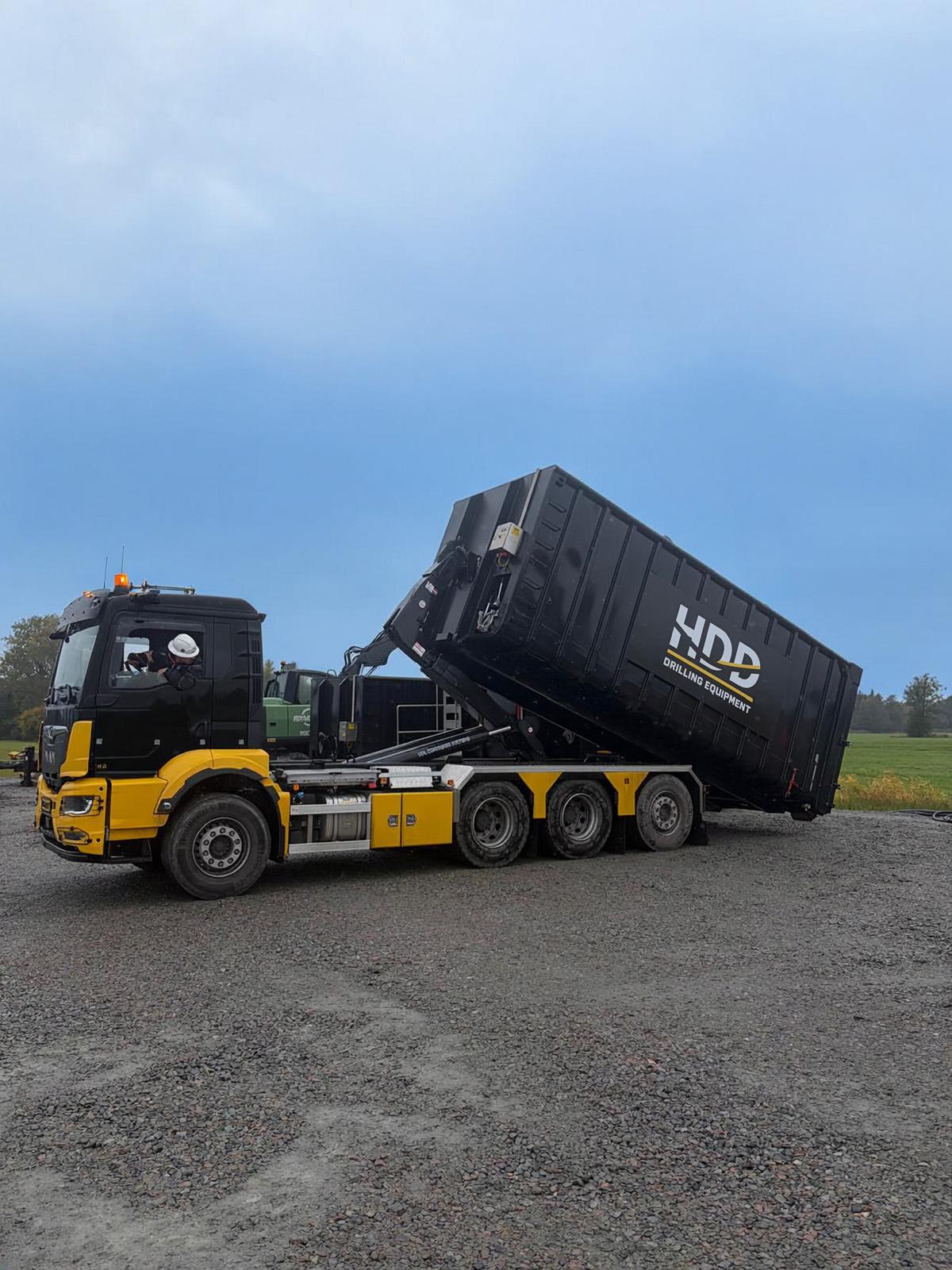
- Practical transport: A design that suits the available transport and handling equipment.
The right setup depends on whether the container stores clean water, prepared bentonite or recycled drilling fluid.
WaveStorage 40 m³: More than a storage container
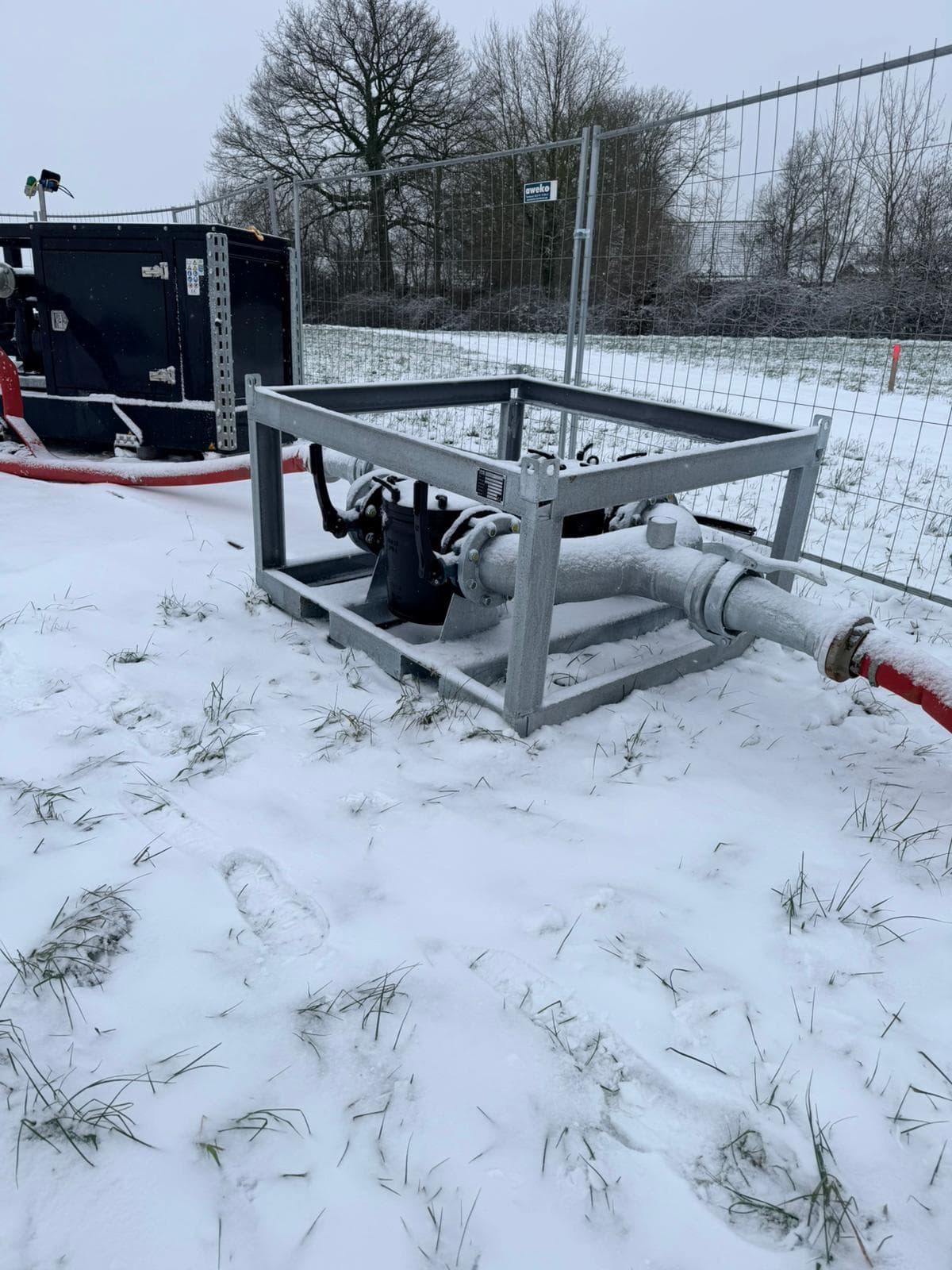
Our WaveStorage drilling fluid storage container combines storage, fluid circulation and transfer functions in one system.
With a capacity of 40 m³, the container provides additional buffer capacity for HDD projects that require larger volumes of drilling fluid.
The system includes:
- Storage capacity: 40,000 litres (40 m³)
- Transfer pump: 100 m³/h at 2 bar (approximately 1,667 L/min)
- Stainless steel submersible mixer: Helps maintain fluid circulation inside the container
- Variable Frequency Drive (VFD): Allows control of mixer operation
- Electrical connection: 32A / 400V
- Remote-controlled transfer pump: For practical fluid handling on site
The integrated submersible mixer helps keep prepared drilling fluid moving inside the container. Meanwhile, the transfer pump allows operators to move fluid to other parts of the drilling fluid system. Actual transfer performance depends on fluid properties, pipework and system resistance.
By combining storage, mixing and transfer functions, the WaveStorage provides more flexibility than a basic storage tank.
Combining storage with HDD mixing equipment
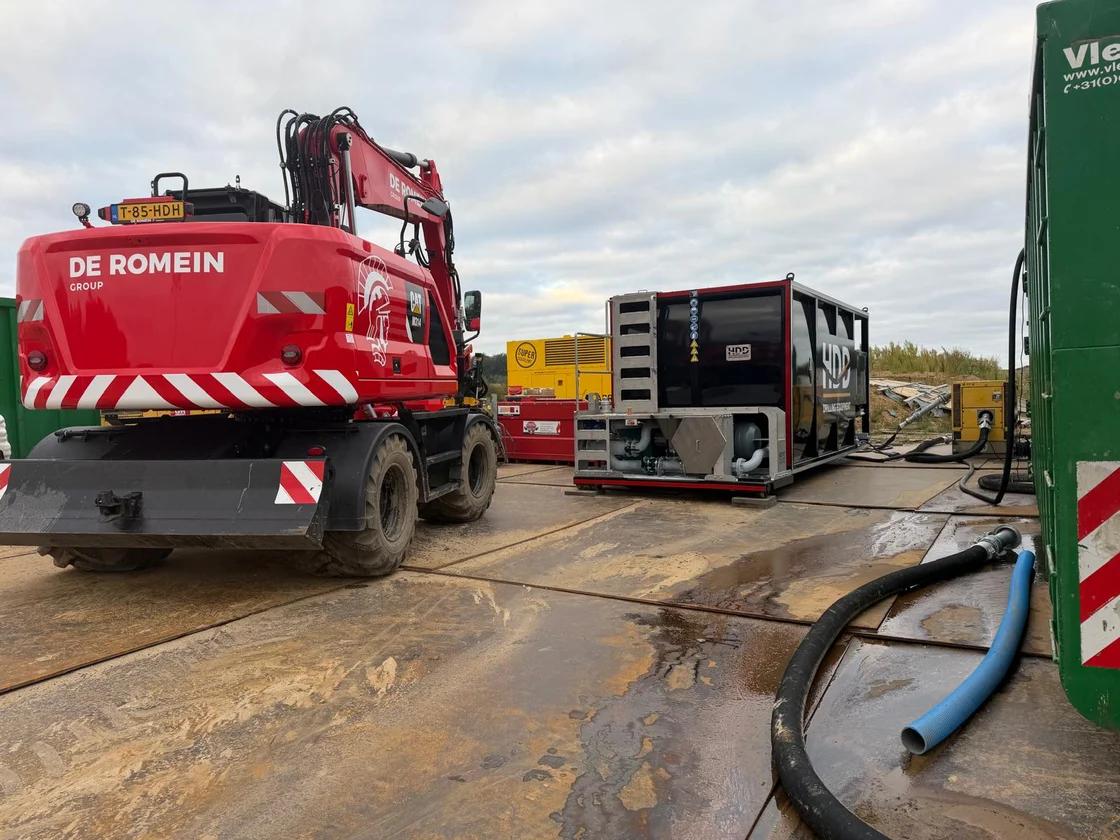
Storage works best when it matches the capacity of the mixing system and the drilling rig. For example, our MudForce 2500 HDD mixing unit has an 18 m³ tank and uses one pump for both mixing and transfer. The unit provides a rated mixing flow of 2,500 L/min at 4 bar and a transfer flow of 1,500 L/min at 4 bar. However, mixing circulation is not the same as the rate at which the system produces fully prepared drilling fluid. When a project requires additional buffer capacity, operators can combine the mixing unit with one or more storage containers.
For example, a MudForce 2500 and a 40 m³ WaveStorage container provide a combined nominal tank capacity of 58 m³.
This setup gives the crew more storage flexibility while allowing the mixing unit to prepare drilling fluid for the operation. The actual usable capacity depends on the operating setup and fluid levels.
How much storage is enough for your HDD project?
There is no single storage capacity that suits every HDD operation. A small drilling rig with a reliable water supply may need relatively little additional storage. However, a larger HDD project with high fluid demand, limited water access or long delivery intervals may require several storage containers. To choose the right capacity, compare the rig’s peak fluid demand with the available mixing, recycling and water supply capacity. Then calculate how much buffer you need to cover expected interruptions.
The goal is simple: enough drilling fluid storage to keep the rig supplied without adding unnecessary equipment to the job site.