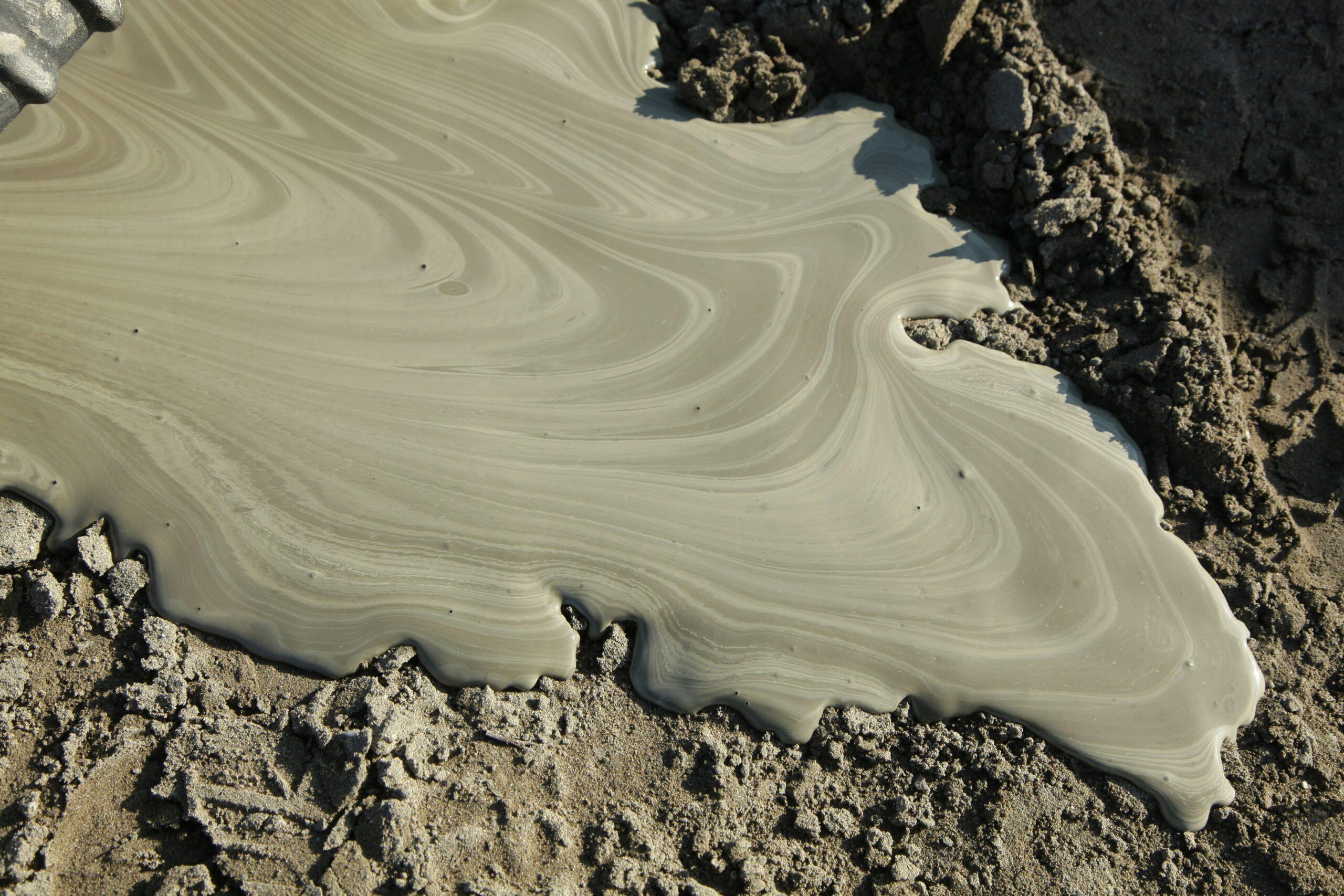
In horizontal directional drilling (HDD), drilling fluid carries cuttings out of the borehole, helps stabilise the ground and reduces friction. Preparing the right drilling fluid is important, but keeping it in good condition between drilling stages matters just as much.
A good HDD drilling fluid storage system does more than hold extra fluid. It helps maintain a consistent bentonite mixture, supports reliable fluid transfer and gives drilling crews better control over fluid management on site.
So what should HDD contractors consider when choosing a drilling fluid storage tank?
1. Why drilling fluid storage matters in HDD operations
Drilling fluid demand changes throughout an HDD project. Pilot drilling, reaming and product pipe installation can require different flow rates and fluid volumes. A storage tank creates a buffer between fluid preparation, recycling and consumption at the drilling rig. This becomes especially useful on larger HDD projects. The drilling rig can continue drawing fluid from storage while the mixing or recycling system operates at a different rate. Without enough storage capacity, the drilling operation depends heavily on the immediate output of the mixing system. However, tank capacity alone does not guarantee effective fluid management. The system must also handle the properties of bentonite drilling fluid.
2. Preventing bentonite settlement: why effective mixing is essential
Bentonite drilling fluids contain particles that can settle when the fluid remains still for long periods. Without enough circulation, heavier particles may collect at the bottom of the tank. This can cause uneven fluid properties, sediment buildup and more cleaning work. A good storage system therefore needs more than surface movement. The goal is to keep fluid moving throughout the tank, including the bottom and corners where sediment can collect. Mechanical agitators, submersible mixers and recirculation systems can all help maintain fluid movement. The right solution depends on the tank design and the type of drilling fluid. Mixer position matters just as much as power. A powerful mixer in the wrong position may create visible movement at the surface while leaving areas near the bottom almost untouched. For HDD contractors, the key question is not simply whether a tank has a mixer. The mixing system must suit the tank shape, fluid properties and operating conditions.
3. Choosing the right transfer pump for drilling fluid
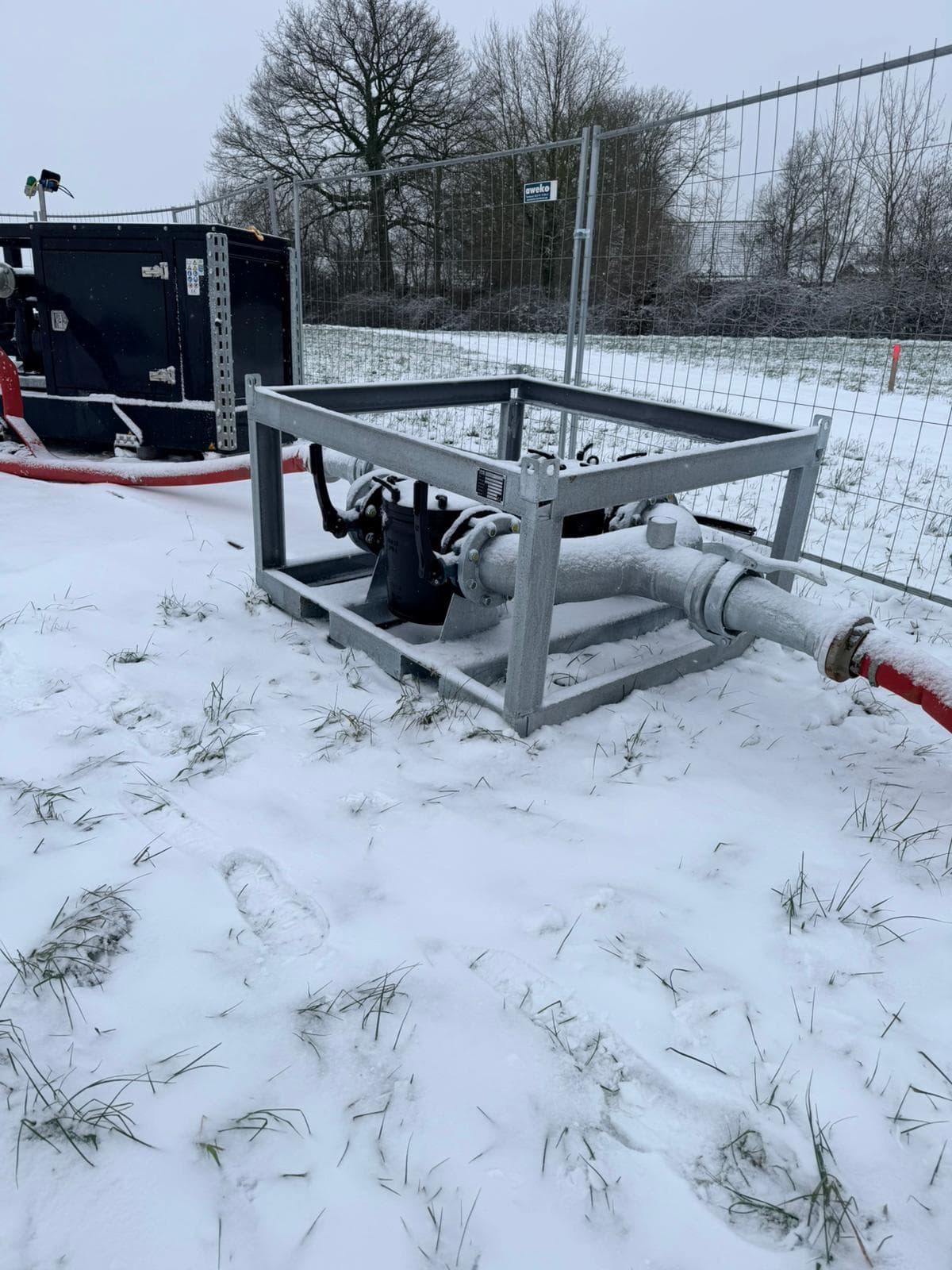
A drilling fluid storage tank must be able to transfer fluid reliably to the next stage of the operation. Depending on the site configuration, this may involve transferring drilling fluid to a mixing unit, recycling system, another storage tank or a supply system feeding the drilling rig.
When selecting a transfer pump, several factors should be considered:
- Flow rate (m³/h or L/min): How much drilling fluid must the pump transfer?
- Operating pressure (bar): How much pressure does the system need to overcome hose resistance and height differences?
- Fluid properties: Can the pump handle the fluid’s viscosity, density and solids content?
- Connection sizes: Do the hoses and pipe connections support the required flow?
- Wear resistance: Can the pump handle abrasive particles, especially when transferring untreated drilling returns?
For example, a transfer pump rated at 100 m³/h (approximately 1,667 L/min) at 2 bar provides a useful reference for high-volume fluid transfer.
However, the actual operating flow depends on the complete installation, including hose length, pipe diameter, elevation and fluid properties. A transfer pump should not automatically be considered a substitute for a dedicated mixing system. Moving fluid between tanks and maintaining a homogeneous suspension inside a tank are two different functions.
4. How much drilling fluid storage capacity do you need?
There is no single tank capacity suitable for every HDD project. The required storage volume depends on several factors, including the drilling rig’s fluid consumption, the output of the mixing system, recycling capacity and the available space on site. Consider a drilling operation consuming 1,000 L/min of drilling fluid.
A 40 m³ storage tank provides a theoretical buffer of 40 minutes at this consumption rate, assuming no additional fluid enters the tank.
In practice, the usable buffer will be lower because tanks cannot always be emptied completely and a minimum operating level may be required.
A simple starting point for calculating storage requirements is:
Required buffer volume (m³) = Fluid consumption (L/min) × Required buffer time (min) ÷ 1,000
For a drilling operation requiring a 30-minute buffer at 1,000 L/min, the theoretical storage requirement is 30 m³. This calculation provides an initial indication. Additional capacity may be necessary to account for operational interruptions, reserve volume and the characteristics of the fluid management system.
5. Separating fresh drilling fluid, returns and recycled fluid
Not all drilling fluid on an HDD site serves the same purpose. Freshly mixed bentonite fluid, untreated drilling returns and processed fluid should be managed according to their condition and intended use. Separating these streams helps prevent unwanted contamination and provides better control over fluid quality.
A typical HDD fluid management setup may include:
- Mixing unit: Prepares fresh bentonite drilling fluid.
- Storage tank: Holds drilling fluid before further use or transfer.
- Recycling system: Removes drill cuttings and other solids from returned drilling fluid.
- Transfer pumps: Move drilling fluid between the different stages of the operation.
Mixing and recycling should not be confused. A mixer keeps particles suspended, while a recycling system separates unwanted solids from the fluid. Combining the correct equipment allows HDD contractors to manage drilling fluid more effectively throughout the project.
6. Cleaning and maintenance: often overlooked in tank design
Drilling fluid storage tanks operate in demanding conditions. Even with effective mixing, sediment can accumulate over time, particularly when the tank is used for untreated returns. This makes cleaning access an important design consideration. A practical storage system should provide suitable access for inspection and cleaning, along with drain points that allow accumulated material to be removed. The design should also consider how easily pumps, mixers and other components can be inspected or maintained. Reducing difficult-to-reach areas can make routine maintenance easier and help minimise downtime between projects.
7. A practical example: 40 m³ fluid-tight HDD storage container
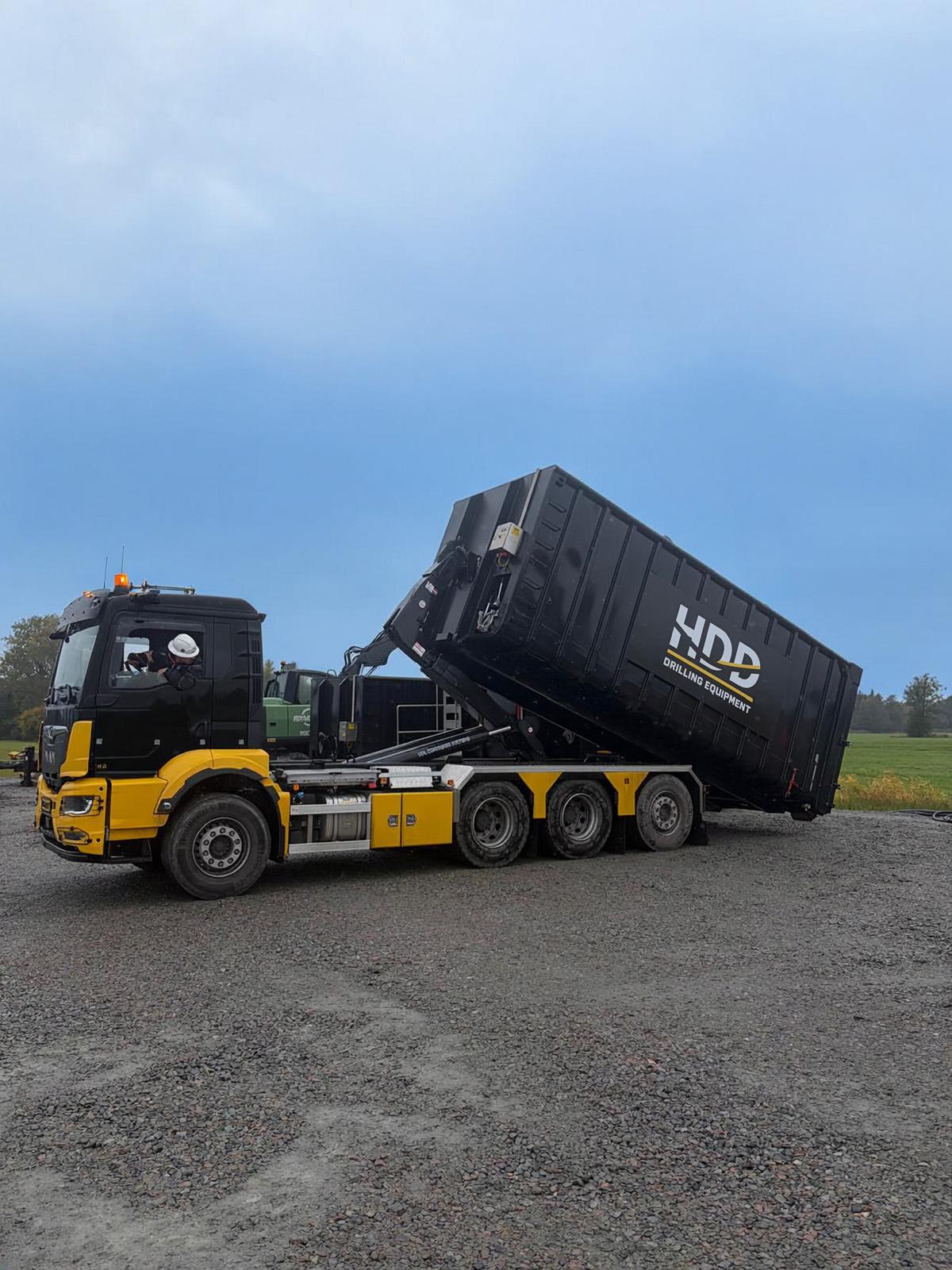
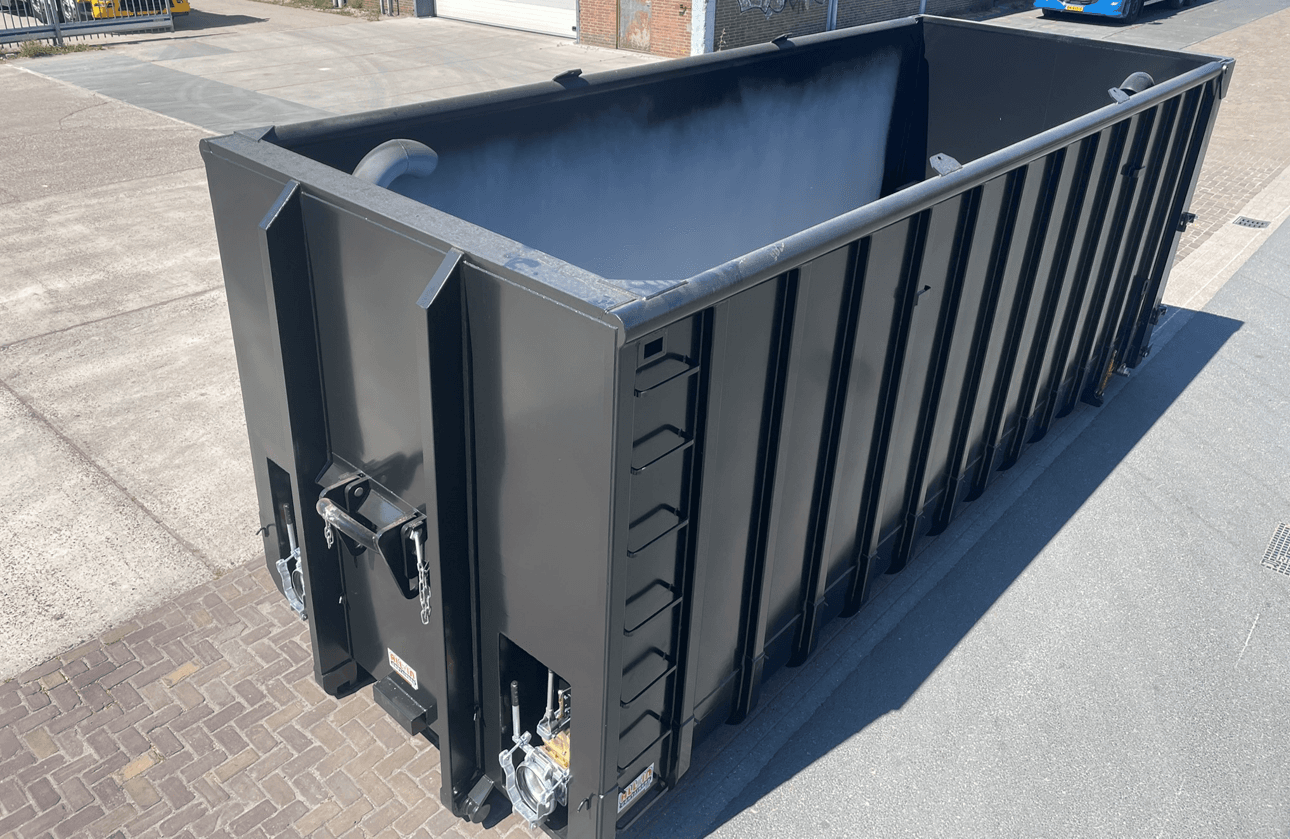
For larger HDD projects, a fluid-tight storage container can provide a flexible solution for temporary drilling fluid storage and transfer.
An example configuration is a 40 m³ fluid-tight container equipped with:
- Stainless steel submersible mixer with frequency inverter
- Transfer pump with a nominal capacity of 100 m³/h at 2 bar
- 32 A / 400 V electrical connection
- Remote-controlled transfer pump operation
- Integrated mixing and transfer functions
A frequency-controlled submersible mixer allows the mixing speed to be adjusted to suit operating requirements. The combination of mixing equipment and a dedicated transfer pump makes it possible to maintain fluid circulation within the container while transferring drilling fluid when required. The actual configuration should always be matched to the intended application, particularly when handling drilling fluids with different solids concentrations.
8. What should HDD contractors look for in a drilling fluid storage system?
When comparing HDD storage solutions, it is worth looking beyond the advertised tank volume. Consider whether the equipment provides sufficient usable capacity, effective mixing throughout the tank, suitable transfer performance and practical access for cleaning and maintenance. The best solution is not necessarily the largest tank or the most powerful pump. It is the combination that fits the drilling operation and works efficiently with the existing mixing and recycling equipment.
Drilling fluid storage solutions from HDD Drilling Equipment
At HDD Drilling Equipment, we focus on practical equipment solutions for horizontal directional drilling operations.
By combining experience from HDD projects with in-house engineering and equipment development, we can help contractors select storage, mixing and fluid transfer solutions suited to their specific requirements.
Whether you are looking for a fluid-tight storage container, a bentonite mixing unit or equipment for a complete drilling fluid management setup, we can help you determine the right configuration for your project.
Looking for a drilling fluid storage solution for your HDD project? Contact HDD Drilling Equipment to discuss your required capacity, mixing arrangement and transfer performance.