A filter can still pass fluid while becoming increasingly restricted. That is why looking at the filter itself does not always tell you when it needs attention. Comparing the pressure before and after the filter gives you another way to monitor what is happening inside the system.
Why measure on both sides?
As fluid enters the filter, solids are captured by the filter element. The pressure at the inlet and outlet can be compared to see the pressure difference across the filter.
When that difference changes during operation, it can indicate that the resistance through the filter is changing. This gives the operator useful information without first having to open the filter housing.
Filter size matters
The filter element determines which particles can pass through and which are retained. A finer filter can remove smaller particles, but it may also become restricted differently from a coarser filter.
The right choice therefore depends on what needs to be removed from the fluid and what the equipment further downstream can handle.
Don’t rely on one reading
Pressure difference should not be viewed as a universal number with one fixed limit. Flow rate, fluid properties, filter size and the system itself all influence the readings.
What matters is understanding what is normal for your setup and noticing changes during operation.
Easier checks on site
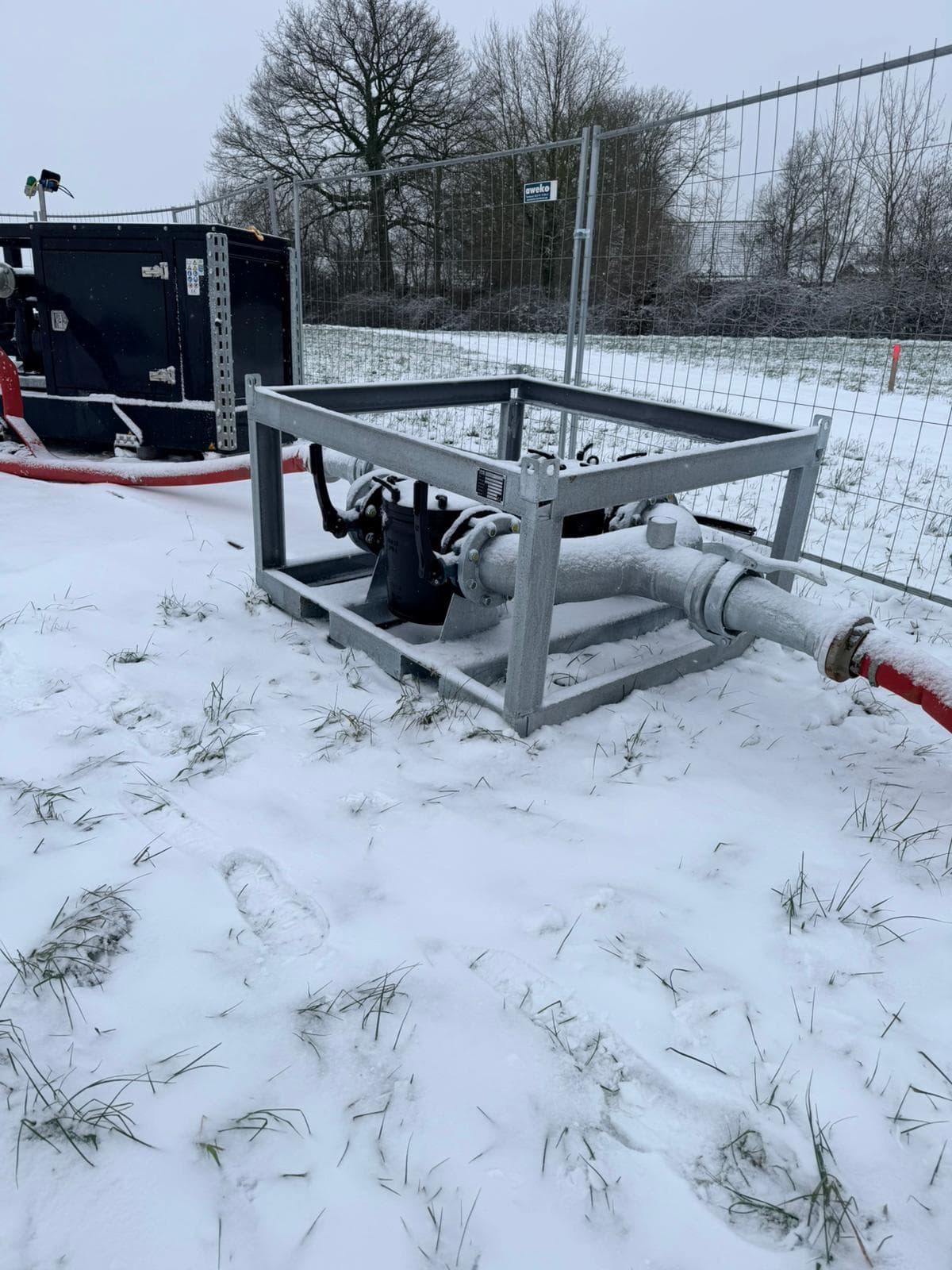
Our SlurrySafe 6″ filter skid is equipped with pressure gauges on both the inlet and outlet. This makes it possible to monitor the pressure difference across the filter during operation. Interchangeable filter elements are available in 3, 5 and 8 mm.
It is a simple principle, but a useful one: measure before and after the filter to get a better picture of what is happening inside it.