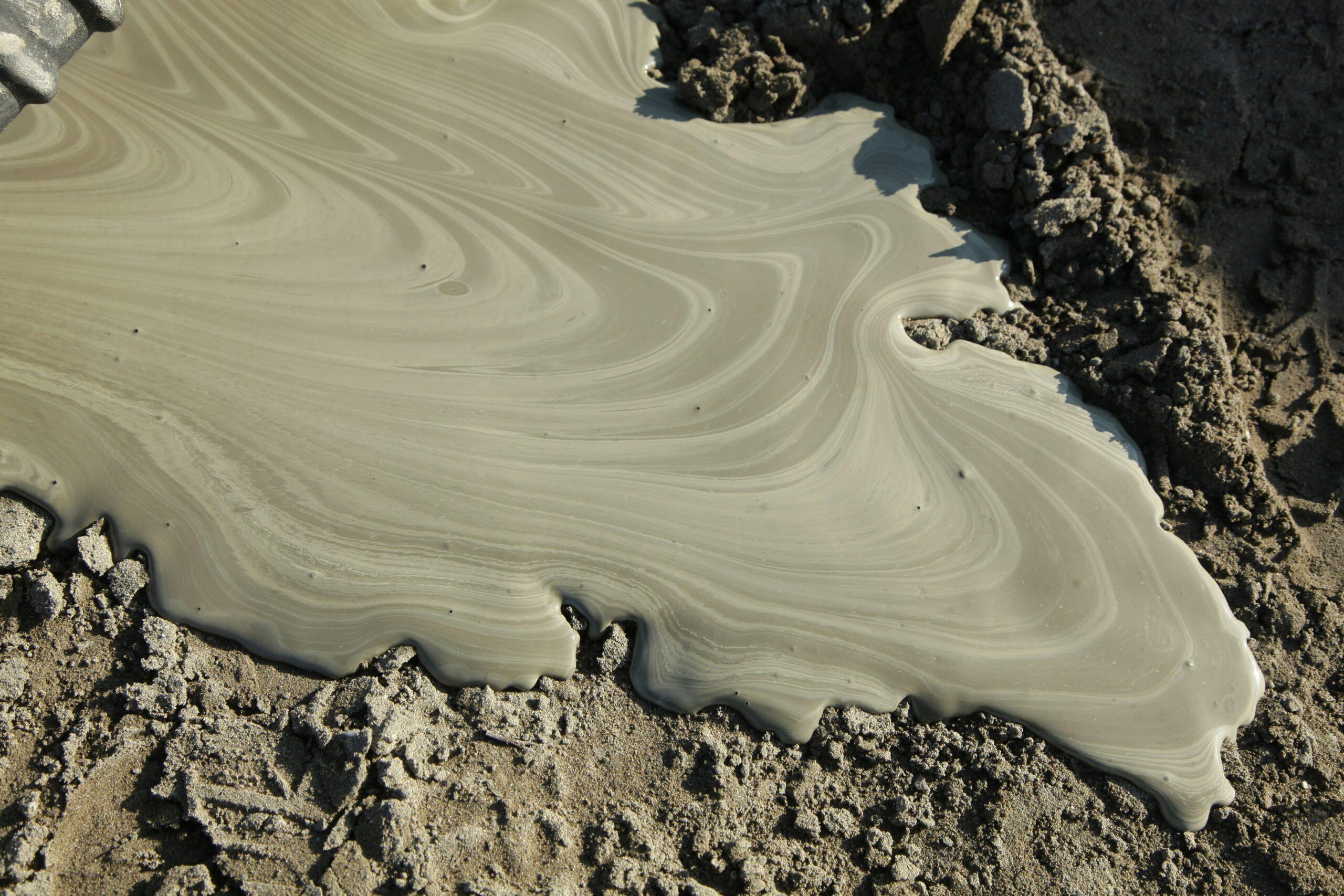
Bentonite Mixing for HDD: Pumps, Flow Rates and Drilling Fluid Quality
Good drilling fluid starts with proper bentonite mixing. In Horizontal Directional Drilling (HDD), drilling fluid helps transport drill cuttings, support the borehole, cool drilling tools and reduce friction.
However, good drilling fluid requires more than adding bentonite to water. Water quality, pump capacity, mixing time and the right additives all affect the final result.
A reliable HDD bentonite mixing system helps drilling crews prepare consistent drilling fluid and keep the drilling rig supplied throughout the project.
Why proper bentonite mixing matters
Bentonite needs thorough mixing with water to develop the right drilling fluid properties. Poor mixing can cause lumps, uneven viscosity and changes in fluid quality. As a result, the drilling fluid may not perform as expected. A good bentonite mixing unit creates enough flow to mix the bentonite evenly throughout the tank. However, moving large amounts of water is not the only goal. The system must also produce a smooth, consistent drilling fluid that suits the ground conditions.
Mixing capacity: Why litres per minute matter
The pump plays a major role in every HDD bentonite mixing system.
Its flow rate determines how much fluid moves through the mixing circuit. At the same time, pump pressure helps push the fluid through pipes, valves and mixing equipment.
A higher flow rate can improve mixing, provided the system uses that flow effectively.
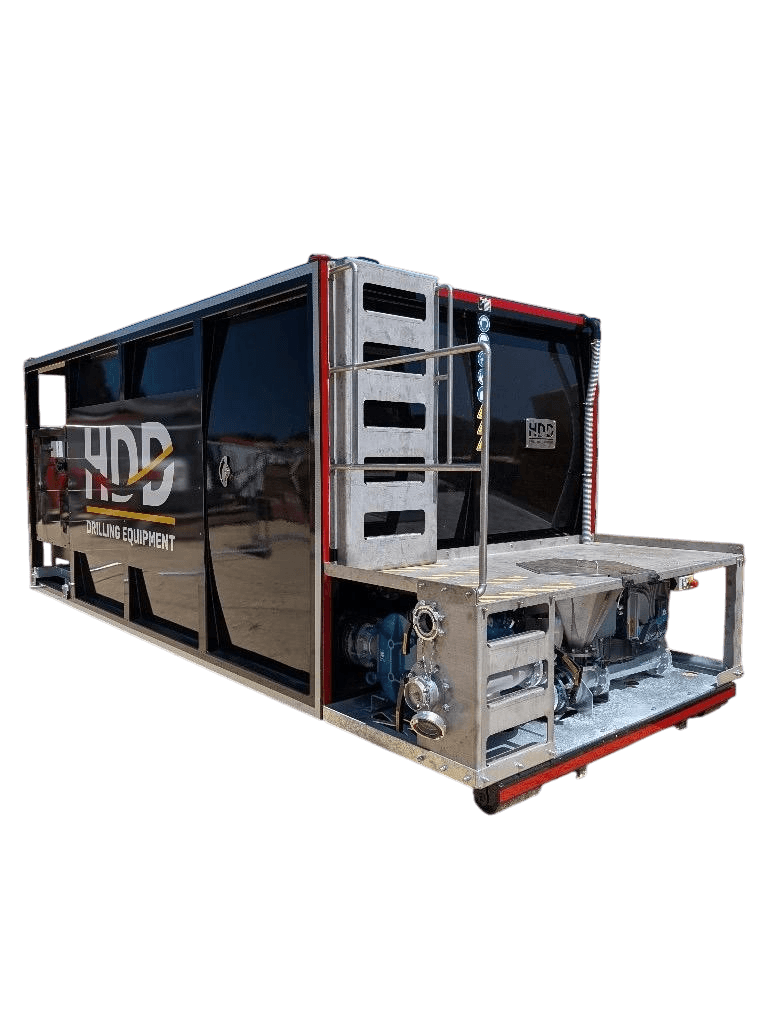
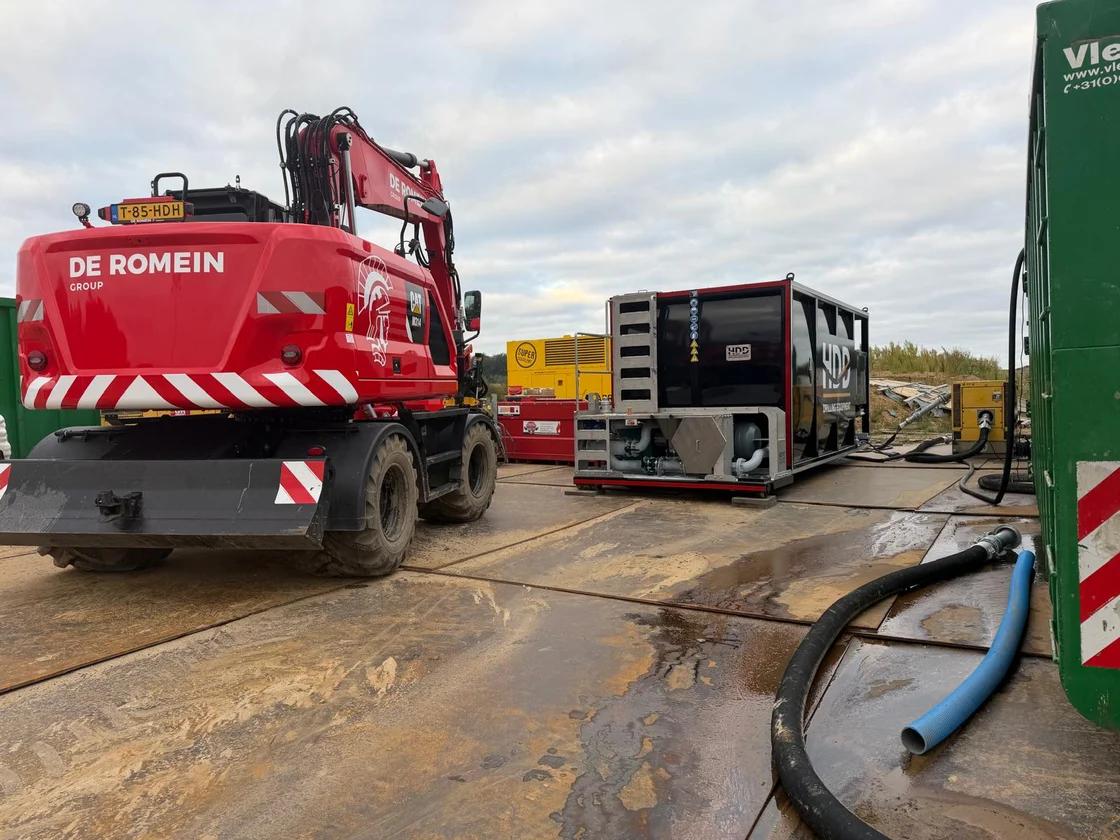
Our MudForce 2500 HDD mixing unit uses one pump for both mixing and fluid transfer.
- Mixing flow rate: 2,500 L/min at 4 bar
- Transfer flow rate: 1,500 L/min at 4 bar
- Tank capacity: 18,000 litres (18 m³)
- Single-pump design: One pump handles mixing and transfer
- Variable Frequency Drive (VFD): Adjusts pump operation to the process
At a flow rate of 2,500 L/min, the pump moves a volume equal to the full 18,000-litre tank capacity in about 7.2 minutes.
However, this does not mean that every litre passes through the mixing circuit exactly once. It also does not mean that the bentonite fully hydrates within 7.2 minutes.
Actual mixing time depends on the tank design, bentonite dosage, fluid properties and water quality.
Mixing capacity is also different from tank emptying time.
The mixing circuit moves fluid through the system, while the transfer function supplies drilling fluid according to the rig’s demand.
For example, if the drilling rig uses 500 L/min, a full 18,000-litre tank could theoretically supply the rig for 36 minutes without adding more fluid.
However, operators can extend this supply time by adding water and preparing more drilling fluid during operation.
Therefore, the actual tank level depends on how much fluid the rig uses and how quickly the mixing system can replace it.
One pump, two functions: The MudForce mixing concept
Many HDD mixing systems use separate pumps for mixing and transfer. However, the MudForce 2500 combines both functions in one pump.
This design reduces the need for extra pump equipment while providing high mixing and transfer capacity.
Mixing function
During mixing, the pump provides a rated flow of 2,500 L/min at 4 bar.
This flow helps mix bentonite and other drilling fluid products with water. It also keeps the fluid moving through the mixing circuit.
Transfer function
The same pump also transfers drilling fluid to the drilling rig or another storage tank.
In transfer operation, the system provides a rated flow of 1,500 L/min at 4 bar.
However, the actual flow depends on the rig’s demand, fluid properties and resistance in the pipes.
Why use one pump for both functions?
The single-pump design offers several practical benefits:
- Simpler design: One pump handles both mixing and transfer.
- Fewer components: The system does not need a separate transfer pump.
- Efficient operation: The same pump supports fluid preparation and supply.
- Flexible flow control: The VFD allows operators to adjust pump operation.
As a result, the MudForce 2500 combines two important functions in one practical HDD mixing system.
Water quality: The foundation of good bentonite mixing
Water quality plays an important role in bentonite mixing.
For example, water hardness, pH and dissolved minerals can affect how bentonite mixes and hydrates. Poor water quality may also increase the amount of bentonite needed to reach the desired drilling fluid properties. Therefore, operators should check the water quality before mixing and follow the drilling fluid supplier’s advice on water treatment. Good water preparation helps achieve more consistent drilling fluid results.
Mixing sequence and bentonite hydration time
Bentonite, polymers and other additives may need different mixing methods.
For example, some products require slow addition, while others need a specific mixing order or extra hydration time. Adding products in the wrong order can reduce their performance.
Bentonite also needs time to absorb water and develop its properties. This process is called hydration. The required time depends on the bentonite product, water quality, temperature and mixing conditions. Although a powerful mixing pump helps spread bentonite through the water, it cannot replace the required hydration time.
Therefore, always follow the drilling fluid supplier’s instructions for dosage, mixing order and hydration.
How much bentonite should you add per 1,000 litres?
There is no standard bentonite dosage that works for every HDD project.
The correct amount depends on the ground conditions, water quality, bentonite type and drilling fluid requirements.
For example, the table below shows how different dosages translate into quantities for an 18,000-litre tank.
| Bentonite dosage | Per 1,000 litres | Per 18,000 litres |
|---|---|---|
| 20 kg/m³ | 20 kg | 360 kg |
| 25 kg/m³ | 25 kg | 450 kg |
| 30 kg/m³ | 30 kg | 540 kg |
| 35 kg/m³ | 35 kg | 630 kg |
| 40 kg/m³ | 40 kg | 720 kg |
These figures are examples only, not recommended dosages. Always follow the drilling fluid programme and product instructions. The calculations assume 18 m³ of water.
After mixing, operators can use a Marsh funnel test to check drilling fluid viscosity. However, viscosity alone does not tell the whole story. Depending on the project, crews may also need to check fluid density, pH, sand content and fluid loss. These tests help operators understand whether the drilling fluid meets the project’s requirements.
How to maintain a consistent mixing process
Good drilling fluid preparation requires both reliable equipment and a consistent working method. First, operators should check the water quality and add the correct amount of bentonite.
Next, they should allow enough mixing and hydration time. Finally, regular fluid tests help confirm that the mixture meets the required properties. A Variable Frequency Drive (VFD) also helps operators control pump operation during mixing and transfer. For larger HDD projects, tank capacity and transfer flow become even more important.
The mixing unit must supply enough drilling fluid to support the rig without unnecessary delays.
After each mixing cycle, operators should clean the hopper and pipework according to the maintenance instructions. This helps prevent material buildup and prepares the system for the next cycle.
MudForce 2500: High-capacity bentonite mixing for HDD projects
The MudForce 2500 supports HDD projects that require high mixing capacity and a steady drilling fluid supply.
Unlike systems that use separate mixing and transfer pumps, the MudForce 2500 combines both functions in a single-pump design.
The unit offers:
- 18,000-litre tank capacity
- 2,500 L/min mixing flow at 4 bar
- 1,500 L/min transfer flow at 4 bar
- One pump for mixing and transfer
- Variable Frequency Drive (VFD)
- Integrated big-bag crane
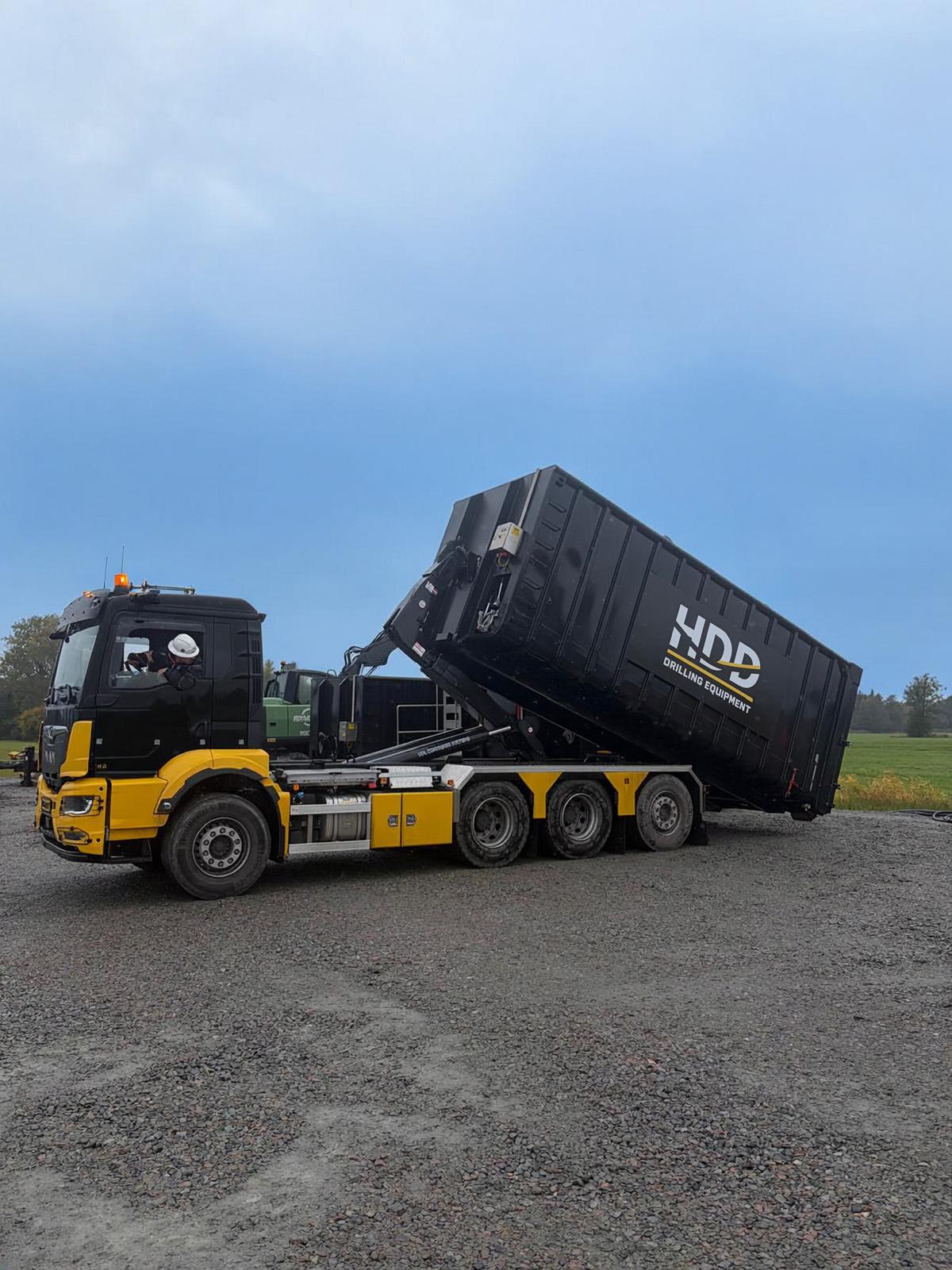
- Hook-lift or cable handling options
This design combines fluid mixing, storage and transfer in one unit.
As a result, drilling crews can prepare drilling fluid and manage supply to the rig using one integrated system.
The right drilling fluid starts with the right mixing process
Successful bentonite mixing requires the right combination of water quality, mixing capacity, hydration time and fluid testing.
A reliable HDD bentonite mixing unit provides the flow and tank capacity needed to support drilling operations.
However, operators must always adjust the drilling fluid mixture to the ground conditions and project requirements.
With its single-pump design, the MudForce 2500 brings mixing and transfer functions together in one system.
One pump. Two functions. High-capacity HDD bentonite mixing.
Written by Service team HDD Drilling Equipment
The engineers who build, test and service the mixing units in Nijverdal.